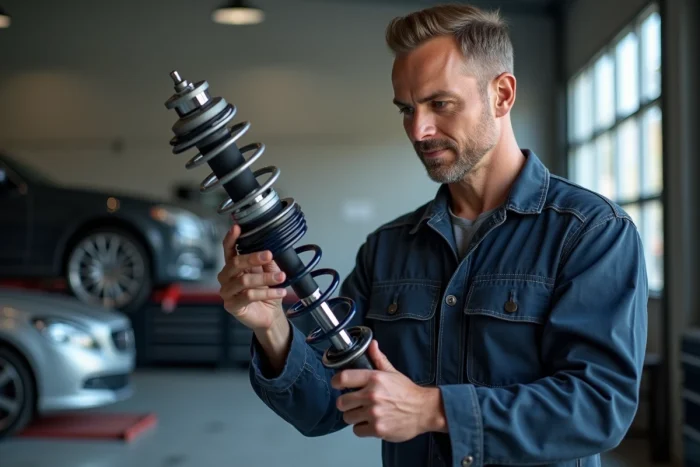
A height-adjustable shock absorber does not always pass the technical inspection, even if it is approved, if the installation or adjustment does not comply with the manufacturer’s tolerances. Owners who modify their vehicle’s suspension often overlook that every modification, visible or not, can lead to an immediate re-inspection.
The examination criteria have changed: a much more attentive eye is placed on the compliance of coilovers. The condition of the mounts, the accuracy of the adjustments, and compatibility with the original axle are scrutinized. At the slightest anomaly, the penalty is imposed, regardless of the brand or cost of the equipment.
Coilovers: why they are increasingly appealing to motorists
The success of coilovers is not just a passing trend. Being able to adjust the height, rethink the suspension down to the millimeter, transform the driving feel: it has become a sought-after asset, well beyond the usual track enthusiasts. The daily road takes on a new face when the car seems glued to the asphalt, precise in every curve, reliable in speed changes. For many, the coilover kit reinvents the joy of driving, even without venturing off the most mundane pavement.
By modulating the suspension to their liking, each driver finds their balance: lowered or raised body, firmness more or less pronounced, adaptation to the weather or type of journey. Manufacturers are keeping up, multiplying models to meet all desires, from simple customization to performance enhancement. Today, you no longer need to be an expert to equip yourself.
But this wave of adoption draws attention to the legislation. Choosing a coilover kit requires serious consideration of the technical inspection of coilovers, as a single oversight is enough to have your vehicle rejected. Approximate installation, imprecise adjustment, height outside the limits, the guillotine does not wait for negligence to fall.
Adjustments, maintenance, and tips to get the best from your suspensions
Mastering the coilover adjustment
Adjusting coilovers is not just about lowering or raising the body at will. A balance is essential: each axle must benefit from a symmetric adjustment to maintain the vehicle’s stability. The threaded collar allows for fine-tuning the ground clearance on demand, but beware: too much stiffness causes the car to bounce at the slightest bump, while too soft a setting makes the road holding floaty and unpredictable.
Maintenance: prevent wear, ensure performance
A neglected coilover does not take long to lose its effectiveness. Maintenance is not optional: checking the condition of the bushings and threads, eliminating corrosion, methodically lubricating each moving part, all contribute to the longevity of the system and its compliance on inspection day.
To ensure the reliability and durability of your coilovers, here are the main actions to prioritize:
- Regularly clean the threads, especially after the winter period
- Check the geometry with every height change
- Adjust the setting according to use (road, track, carrying load)
A well-maintained coilover kit ensures safety, efficiency, and peace of mind during the technical inspection. With every modification, a check of the geometry is essential to leave nothing to chance.

What the technical inspection really expects from your coilovers today
Inspection and concrete expectations
It is impossible to slip through the cracks: today, technical inspection centers examine coilovers with heightened vigilance. The focus is on compliance and the overall condition of the suspension system. There is no room for chance: each coilover must be intact, with no significant signs of corrosion or suspicious play. The threaded collar must function perfectly; no anomaly goes unnoticed.
The adjustable height remains tolerated as long as the manufacturer’s recommendations, sometimes noted on the receipt, are strictly followed. Visible modifications, excessively low ground clearance, chassis too rigid, attract the inspector’s eye. Even for enthusiasts, safety does not tolerate improvisation or makeshift solutions.
To ensure the inspection goes smoothly, it is best to check the following points well before the appointment:
- Impeccable condition of the threads, no pronounced wear
- No leaks on the shock absorbers
- All original mounts and nuts securely tightened
In short: any doubt in the installation, a non-compliant accessory, a blatant amateurish weld, all lead to a mention on the report, or even a outright refusal. From now on, passing the technical inspection becomes a finish line that only rigor allows you to cross.
The technical inspection imposes its own rules: attention to detail, traceability of installations, and compliance with standards are essential. No one can take the easy route here. Between the desire for customization and regulatory imperatives, the margin for maneuver is shrinking, and it is up to motorists to avoid unpleasant surprises by staying as close to the rules as possible.