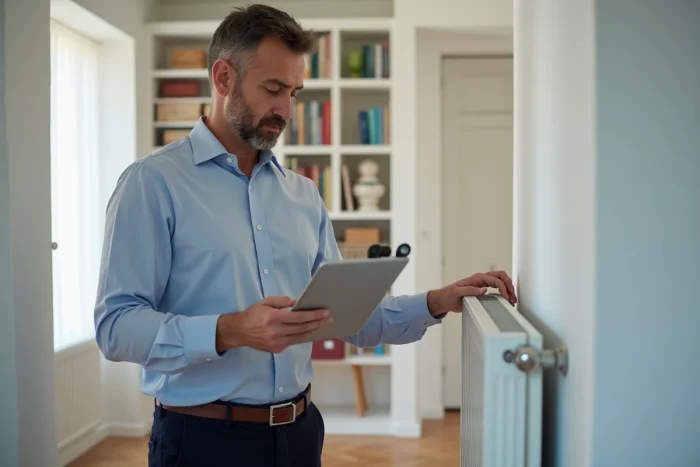
Since 1997, the sale or rental of a property requires the submission of technical diagnostics, under penalty of legal sanctions. Despite a strict regulatory framework, errors and omissions persist, exposing sellers and landlords to costly disputes or transaction cancellations.
Some diagnostics, such as the risk assessment or asbestos detection, are subject to specific standards, but their interpretation varies among operators. The certification of diagnosticians aims to reduce these uncertainties and ensure the reliability of the reports provided to stakeholders.
What the property diagnosis really covers and why it is essential during a transaction
The property diagnosis is not just a quick check before selling or renting. It is a comprehensive examination, required by regulations, that governs each sale or rental of a property. Through the technical diagnostic file, it is about gathering various essential documents for the safety and transparency of the transaction.
Here are the main diagnostics that make up this file:
- DPE (energy performance diagnosis)
- Energy audit for certain properties
- Asbestos diagnosis
- Lead
- Gas
- Electricity
- Termites
- And the Carrez law to measure the precise area of a lot in co-ownership.
These evaluations, conducted according to rigorous standards, provide an objective picture of the property’s condition. They protect each stakeholder during a real estate transaction, whether it involves buying, selling, or renting.
The technical diagnosis goes far beyond an administrative obligation: it engages the responsibility of the seller or landlord. An omission or inaccuracy can derail a transaction or even lead to legal action for hidden defects. It is therefore better to rely on the reliability of property diagnostics. These documents serve as a basis for assessing the energy performance of the property, anticipating potential work, or even adjusting the price downward if necessary.
Each diagnosis has its role. The DPE sheds light on energy consumption, the energy audit reveals weaknesses in insulation, and the Carrez law certifies the actual area. In short, these elements secure the transaction. To learn more about Detectis Immo, their rigorous method and the quality of their follow-up are worth examining closely, especially for those seeking solid support at every stage.
Compliance with these obligations is anything but trivial. The diagnostics structure the entire real estate sector by establishing clarity and responsibility, whether one is a seller, buyer, or tenant.
What are the mandatory diagnostics and how is their implementation organized?
The law precisely defines which diagnostics must accompany a transaction. Only certified diagnosticians are authorized to intervene, depending on the type of property, its age, and its location. The DPE (energy performance diagnosis) is required for any sale or rental. Additionally, the asbestos diagnosis is required for buildings constructed before 1997, the lead (CREP) if the building permit dates back to before 1949, as well as gas and electricity diagnostics for installations over 15 years old.
Here are the main complementary diagnostics to know:
- Termite diagnosis: required in certain areas defined by prefectural order
- Carrez law diagnosis: certifies the private area of a lot in co-ownership
- Energy audit: necessary for certain properties classified F or G
The mission of the certified diagnostician is not limited to ticking off a list. They examine the specifics of the property, identify risks, collect all useful data on-site, and write a report that is valid in case of dispute. The methods used are framed by updated protocols, to align with technical advancements and new regulations.
The intervention concerns both professional clients and individuals. This system ensures the reliability of information, secures both sellers and buyers, and facilitates each step of the transaction. Underlying this is the certification of the diagnostician, which guarantees competence, neutrality, and trust from start to finish.

Hiring a certified expert: a guarantee of reliability and peace of mind for your procedures
Entrusting your property diagnostics to a certified diagnostician is choosing peace of mind. This certification involves advanced training, validated by recognized organizations. The professional stays up to date on regulations through continuing education and masters all technical constraints, from energy performance to energy audits and the analysis of potential risks.
For each mission, the client receives a structured report, legally usable and delivered on time. The diagnostician commits to providing reliable measurements, understandable conclusions, and clear recommendations. The support does not stop at the technical aspect: availability, pedagogy, and tailored advice are also part of the experience. For the seller or landlord, it is the assurance of presenting a complete file, without unpleasant surprises during the sale or rental.
Expertise is also expressed in adapting to each property: taking into account architecture, materials, and client expectations. The diagnostician bridges the gap between regulations and the reality on the ground. Industry professionals, attentive to their e-reputation, also take care of their website, demonstrating seriousness and proximity to future owners or tenants.
Entrusting the technical diagnosis to a certified expert streamlines each transaction, reassures the parties involved, and limits the risk of disputes. This approach fosters a climate of trust, where safety and transparency remain the watchwords.
Ultimately, choosing a certified diagnostician means betting on peace of mind and preserving the value of your property. In the race to sign, expertise makes all the difference.