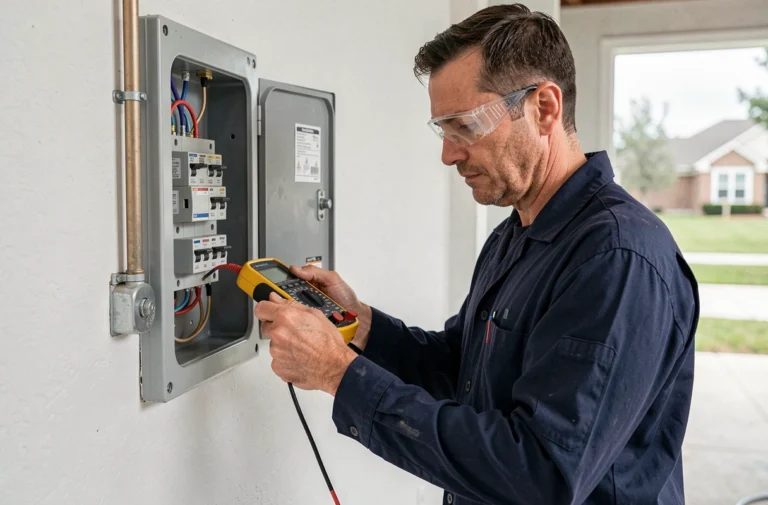
A fire safety inspection is scheduled in three weeks, and we realize that the safety register has not been updated for over a year. The extinguishers in the basement have an expired maintenance label, and no one really knows if the posted evacuation plan still corresponds to the current layout of the offices.
This scenario is regularly encountered in professional premises, whether it be a shop, a workshop, or an office building. Working with a specialized company ahead of the inspection can transform a stressful deadline into a genuine upgrade of fire protection.
Consistency between the DUERP and fire safety measures: the first point inspectors check
During an inspection, inspectors no longer just check for the presence of an extinguisher on each floor. Their approach has evolved: they examine the consistency between the fire risk analysis recorded in the DUERP and the measures actually in place.
In clear terms, if the single document identifies a risk related to the storage of flammable products in a technical room, the inspector expects to find an appropriate extinguisher (powder or CO2, not foam), compliant ventilation, and instructions posted at the entrance of that room.
It is recommended to review the DUERP through the lens of fire scenarios. Each identified risk should be linked to a piece of equipment, a procedure, or a physical arrangement. This matching work is carried out by a fire safety company by comparing the document to the actual installations.
The most frequent discrepancies concern areas that have changed purpose since the last assessment: an old office converted into an archive room, a cluttered corridor that used to serve as an escape route. This cross-diagnostic produces a concrete action plan, prioritized by level of criticality.

Fire safety register: creating a credible history before the visit
The safety register is the document that the inspector flips through first, sometimes even before touring the premises. It must contain the history of periodic checks, equipment maintenance dates, evacuation drills conducted, and training attended by the staff.
An up-to-date register demonstrates ongoing management of fire safety. A patchy register gives the opposite impression, even if the installations are in good condition. Document traceability weighs as much as the material state.
Specifically, the register is prepared by gathering:
- The inspection reports for extinguishers and the smoke extraction system, including intervention dates and the name of the technician or verifying organization.
- The reports of evacuation drills, specifying the number of participants, the observed evacuation time, and any issues noted (blocked fire door, inaudible alarm in certain areas).
- The training certificates for personnel designated as first intervention team members or guides and blockers.
- A dated history of updates to the evacuation plan and safety instructions.
If some documents are missing, it is better to note this in the register with an explanatory note rather than leaving a blank. The fire safety company can help reconstruct part of the history from the maintenance labels still legible on the equipment.
The security sector includes a variety of players, from design offices to on-site intervention companies. dpsa sécurité, accessible at dpsa-securite.fr, is one of these specialized structures that assist professionals in their efforts to protect people and property. The choice of partner depends on the nature of the premises, the applicable regulations (ERP, Labor Code, ICPE), and the skills sought.
On-site verification of equipment and emergency installations
Documentary work is not enough. We then move on to the physical inspection of the premises, item by item. Here are the points that generate the most non-conformities during inspections.
Extinguishers and signage
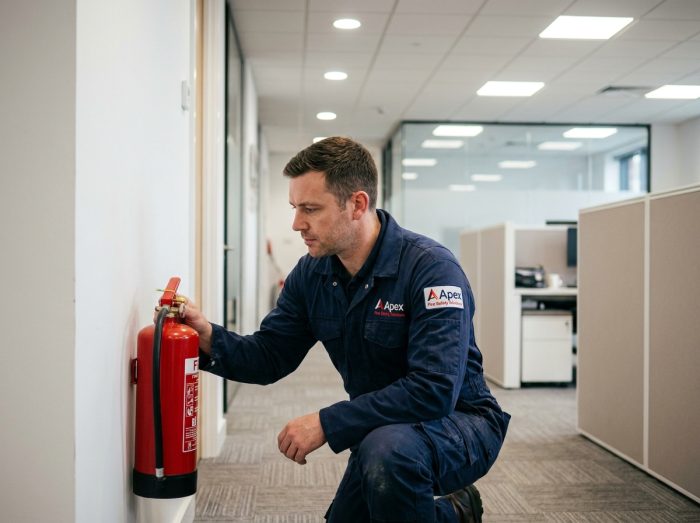
Each extinguisher must be accessible without obstacles, mounted at a regulatory height, with a valid maintenance label. An expired extinguisher or one obscured by furniture is grounds for immediate prescription. It is also checked that the type of extinguisher corresponds to the risk of the area: water spray for offices, CO2 near electrical installations, powder in technical rooms.
Emergency lighting and exits
Autonomous emergency lighting units (BAES) must operate in autonomous mode when the main power supply is cut off. They are tested one by one.
Emergency exits must open in the direction of evacuation, without keys or complex manipulation. A non-compliant lock on an emergency exit door can alone lead to an unfavorable opinion from the commission.
Smoke extraction and circulation
Smoke extraction devices must be tested under real conditions, not just visually. Manual controls are activated, the opening of outlets or the operation of fans is checked. Circulations (corridors, stairs, escape routes) must remain free of any obstruction.
Team training and evacuation drill before the inspection
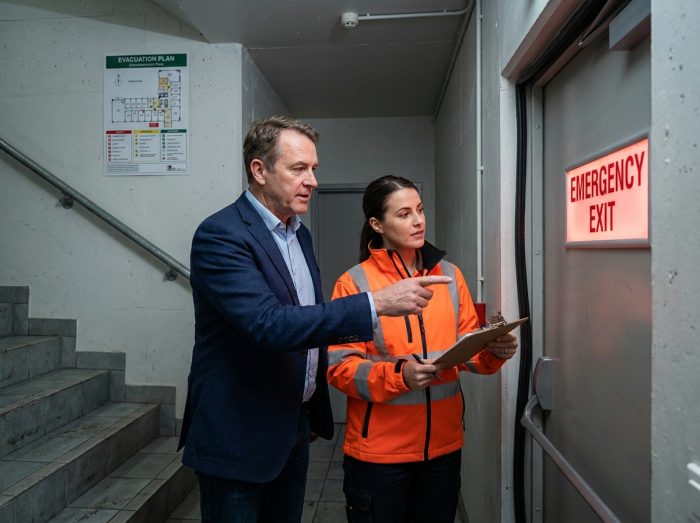
Inspectors sometimes question staff about the instructions to follow in case of fire. If employees cannot locate the nearest extinguisher or identify the assembly point, it undermines the entire file.
Organizing an evacuation drill in the weeks leading up to the inspection serves two purposes: it trains the teams and generates a usable report for the register.
The drill must be realistic. The alarm is triggered without warning, the evacuation is timed, and bottlenecks are noted. The specialized company can oversee the drill and train first intervention team members in the use of extinguishers on real fire (fire pit) or simulator.
Manager’s responsibility and risks in case of non-compliance
There is little talk about the pressure on the manager after an unfavorable opinion. Local enforcement powers allow the mayor or prefect to impose compliance work within a deadline, or even to issue an administrative closure for establishments receiving the public.
The criminal liability of the manager can be engaged in the event of an accident occurring in premises where non-compliance had been reported.
Preparing for an inspection with a specialized service provider does not guarantee a favorable opinion, but it demonstrates an active approach to compliance. Documenting each corrective action and keeping evidence of intervention constitutes a defense element in case of dispute. The safety register, quotes, inspection reports, and training certificates form a body of evidence that courts take into account.
Preparing for a fire inspection revolves around three simultaneous axes: the documentary consistency between the DUERP and the deployed measures, the actual state of the equipment verified item by item, and the occupants’ ability to react correctly. Working on these three axes a few weeks before the scheduled date significantly reduces the risk of prescription or unfavorable opinion.