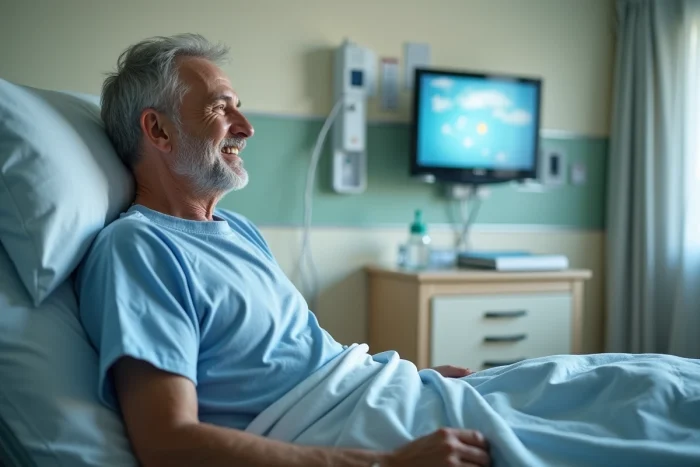
High bills, lukewarm meal trays, and, surprise, a black screen: television in the hospital can sometimes feel like an obstacle course. Some facilities charge a premium, while others include it in the package, but access remains anything but uniform. We often think everything is included, only to discover, sometimes too late, the hidden cost of a simple moment of escape in front of the screen.
From one hospital to another, the question of screens and multimedia services turns into a lottery. Some rooms offer a TV at no charge, while elsewhere you have to open your wallet or negotiate. Nothing is automatic: Wi-Fi, phone, and television depend on the regulations of each facility, and few services are genuinely included by default. Often, you have to navigate through regulations and formalities, or risk being deprived of a comfort that is quite ordinary outside the hospital walls.
What multimedia services are offered during the stay?
It’s difficult to establish a rule: access to television, Wi-Fi, or phone varies not only by hospital but also from one department to another. Even if the individual screen is prominently displayed, it is often only operational after activation. This sometimes requires a card to be picked up at the reception, elsewhere a code or an online procedure. For those waiting outside their room, televisions in common areas (lounge, waiting room, cafeteria) remain accessible, though they lack the privacy of a personal screen.
Spotting good deals and avoiding unnecessary charges quickly becomes an endurance sport. To find your way without wasting time, the Avipay television service in the hospital gathers feedback and useful tips from patients who have experienced these often challenging times.
Operation, rates, and access rules: what to anticipate
Hoping that TV is included leads to many surprises. Sometimes, it broadcasts general channels for free, but the rest is locked unless you pay the required fee. On one hand, some services offer daily packages; on the other, free access applies in children’s rooms or during long hospital stays. An overlooked detail upon arrival, and the bill can rise stealthily.
Several points should therefore be checked as soon as possible to avoid unpleasant surprises:
- Daily rate: Depending on the facilities, TV may be free or subject to a package, sometimes adjusted according to the channels and length of stay.
- Basic channels are often available directly. However, for sports or movies, an additional fee usually applies, unless there are exceptions or staff intervention.
- Children, teens, or those with long hospitalizations often benefit from free television, or at least, it is connected without additional steps.
Most of the time, the terms are clearly stated in the welcome booklet or on a sheet in the room: rates, operation, dedicated contacts, steps to activate or obtain a code, and sometimes a temporary exemption. For internet or phone, the logic remains similar: either a code is provided at entry, or you need to register on-site. In practice, the connection can vary in quality: testing upon arrival avoids frustration and wasted time.
A careful glance at these documents may reveal the presence of exemption forms or indicate whom to contact for quick access to free services, provided you make the request.
Obtaining these services without paying: concrete steps and useful gestures
A visit to the reception or a word with the care staff is often enough to resolve situations: they know how to activate the television for young patients, explain how to benefit from it at no cost during a long stay, or provide the necessary form to complete. Sometimes, the screen turns on spontaneously without conditions, but it’s better to ask before the program starts.
To facilitate access, here are some useful tips gathered from informed patients or families who have already faced the issue:
- From the first day, inform the care staff of your wish to use the free television, emphasizing your situation (child, long stay…).
- Carefully explore the welcome booklet or the displays in the room; they often indicate the steps to take and whom to contact for access.
- If necessary, leave any required proof, certificate, or statement requested to activate an exemption promptly and avoid service interruptions.
On the phone and Wi-Fi side, practices are similar. Some facilities provide codes to connect a device in the lounge or at the cafeteria. Elsewhere, a paid card must be purchased, but it’s always useful to check if any alternative is available, especially to break isolation or maintain contact with the outside world.
Ultimately, access to these services without extra cost often comes down to one reflex: asking the question, inquiring about the procedure, and being proactive about the available options. Behind the impersonal calm of a hospital room, a lit screen can change everything. Sometimes, it’s these small details, free or almost free, that make the wait feel much shorter, and the hospital experience a little less burdensome.