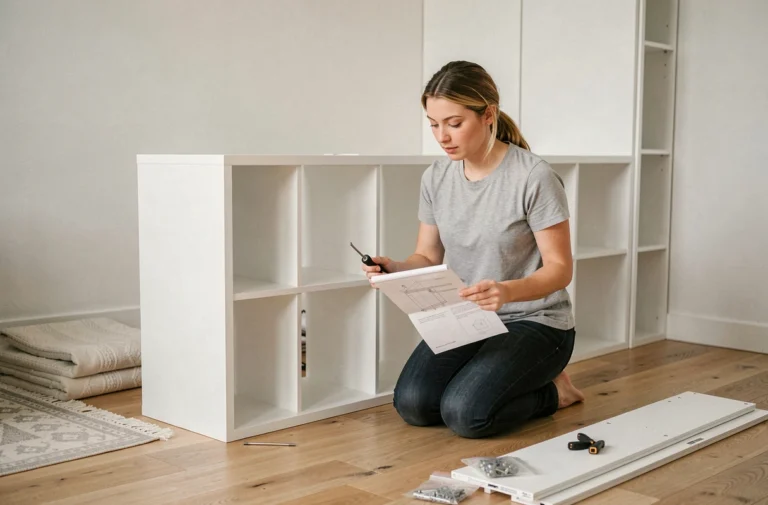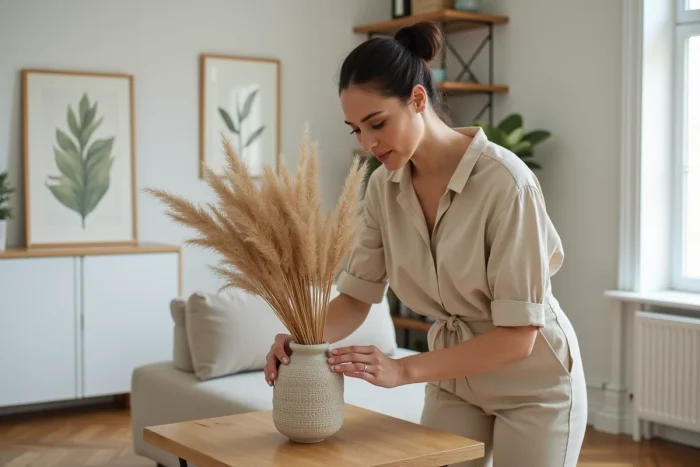
Interior decoration is based on a simple principle: changing the perception of a space without necessarily altering its structure. A repainted wall, a replaced textile, or a repositioned light fixture is enough to transform the atmosphere of a room. This logic of transformation through targeted touches applies to all rooms in the house, from the living room to the bathroom, with visible results in just a few hours.
Reversible decoration: transforming your interior without heavy work
The concept of reversible decoration has been gaining traction in recent years. It encompasses all solutions that allow for modifying the appearance of a space without a permanent commitment: washable paints, repositionable adhesives, removable partitions.
This type of approach meets a concrete need. Tenants cannot drill holes in the walls at will. First-time buyers hesitate to invest in expensive finishes before having lived in their home for several months. The UNAPL has indeed highlighted this increase in demand for reversible decoration in its market analyses of interior architecture professions published in 2023.
Several categories of products facilitate this approach:
- Self-adhesive wallpapers, which can be applied and removed without damaging the surface, allow for creating an accent wall in a living room or bedroom in less than an hour
- Click-lock floor tiles, placed over existing flooring, radically change the look of a room without any intervention on the structure
- High-strength adhesive shelves, capable of supporting several kilos of decorative objects without drilling
Among the useful resources to explore these avenues, the home section on Vivez Décorez gathers practical approaches suited to different interior styles.
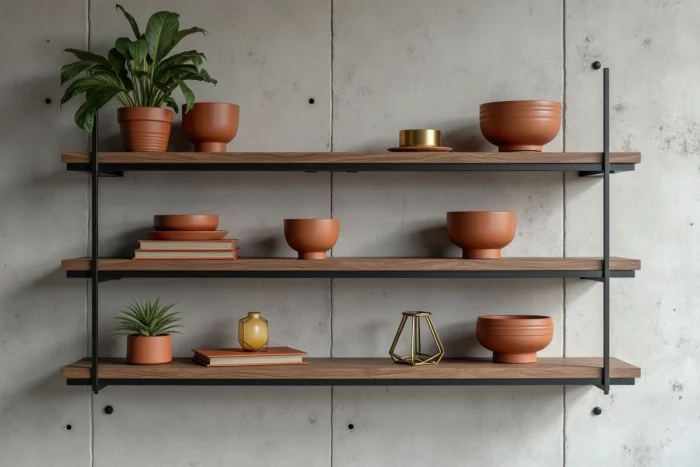
Colors and natural materials: choices that change a room
The choice of colors remains the most powerful decorative lever. Two or three main tones per room are sufficient to create a coherent ambiance. Beyond that, the eye becomes fatigued, and the space loses readability.
Warm shades (terracotta, ochre, mustard) warm up a north-facing living room. Cool colors (blue-gray, sage green) soothe a bedroom or visually enlarge a narrow hallway. The accent wall, painted in a more intense shade than the other three, creates a focal point without overwhelming the room.
Raw materials and textures in interior decoration
Materials contribute as much as colors to the identity of a space. Wood, linen, rattan, or terracotta bring a tactile dimension that smooth and uniform surfaces do not replicate.
Ademe published reports between 2022 and 2023 on furniture and decoration pointing to a growing pressure on brands to display the environmental footprint of decorative objects. Source of wood, recyclability of textiles, durability of light fixtures: these criteria now influence purchasing decisions beyond mere aesthetic considerations.
Combining a solid wood piece of furniture with washed linen cushions and a jute rug creates a cohesive material palette effortlessly. The effect works in a Scandinavian style as well as in a more rustic interior.
Updating existing furniture: decorative repair
Replacing a piece of furniture is not always the best option. A 1970s wooden sideboard repainted in olive green, with new brass handles, becomes a standout piece in the living room. This practice, sometimes referred to as decorative repair, goes beyond simple weekend DIY.
Several DIY retailers report in their 2023-2024 trend barometers a clear increase in workshops and sales around updating existing furniture, renovating kitchens without changing cabinets, and painting tiles. The phenomenon is part of the rise of second-hand and circular economy applied to the home.
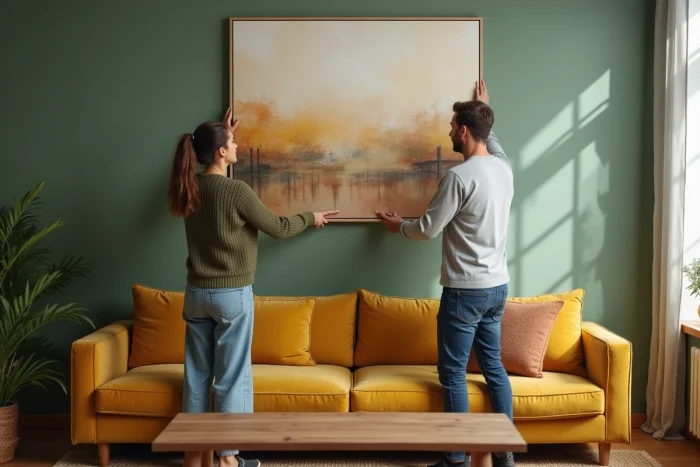
Concrete techniques for updating furniture
Painting remains the most accessible tool. On a raw wood piece of furniture, light sanding followed by two coats of matte acrylic paint transforms the piece in a day. On melamine, a primer is essential to prevent the paint from chipping within a few weeks.
Changing the handles of a piece of furniture or a kitchen produces a disproportionate effect relative to the cost. Leather handles on a white dresser, ceramic knobs on a dark sideboard: the detail is enough to alter the perceived style of the furniture.
Adhesive veneer that mimics wood or marble can also cover a countertop or table surface without replacement. The installation requires precision (avoiding air bubbles, properly smoothing the edges), but the result lasts for several years with minimal maintenance.
Light and objects: the details that finalize the decor
Lighting alters the perception of a space as much as the color of the walls. A room lit by a single central ceiling light appears flat. Multiplying light sources at different heights (table lamp, wall sconce, string lights) creates areas of shadow and light that add depth to the interior.
Dimmable bulbs allow for transitioning from bright light for work to a soft ambiance in the evening, in the same room, without changing fixtures. A mirror placed opposite a window reflects natural light and visually enlarges the space, a principle particularly useful in small living rooms.
Decorative objects work through controlled accumulation. Three vases of different sizes on a shelf create a cohesive ensemble. An isolated object on a large surface looks like an afterthought. Grouping objects by material or color gives a visible intention, even with recovered or thrifted pieces.
The transformation of an interior does not rely on a budget or a major renovation. It depends on the ability to target the right elements: a wall, a piece of furniture, a light source. A well-placed change alters the perception of a room more than a poorly thought-out complete renovation.